
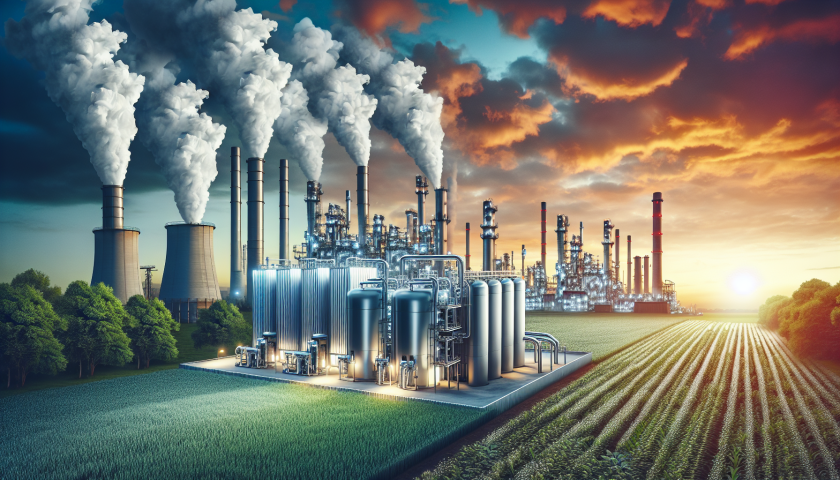
In the relentless battle against climate change, the quest for innovative solutions has led to the emergence of technologies aimed at mitigating the harmful effects of greenhouse gas emissions. Among these pioneering technologies, carbon capture units have garnered significant attention as a potential tool to combat rising carbon dioxide levels in the atmosphere. Let’s delve into the history, mechanics, applications, and implications of carbon capture units in the fight against climate change.
The Genesis of Carbon Capture Units: Invention and Evolution
The concept of carbon capture dates back several decades, with early research efforts focused on capturing and sequestering carbon dioxide emissions from industrial sources. One of the pioneers in this field was Dr. Klaus Lackner, a physicist and environmental scientist, who proposed the idea of “artificial trees” capable of capturing CO2 directly from the air.
Over time, advancements in technology and engineering have led to the development of more sophisticated carbon capture units capable of capturing CO2 emissions from various sources, including power plants, industrial facilities, and even directly from the atmosphere.
Rise to Prominence: Popularity and Adoption
While the concept of carbon capture has been around for decades, it wasn’t until the early 21st century that it began to gain widespread attention and adoption. With growing concerns about climate change and the need for decarbonization, governments, businesses, and research institutions started investing heavily in carbon capture technologies.
Countries such as Norway, Canada, and the United States have been at the forefront of carbon capture research and development, investing in large-scale demonstration projects and pilot programs to test the feasibility and effectiveness of carbon capture at reducing greenhouse gas emissions.
How Carbon Capture Units Work: A Step-by-Step Overview
Carbon capture units employ various methods to capture and store CO2 emissions, depending on the source and scale of the emissions. However, the basic process typically involves the following steps:
- Capture: CO2 emissions are captured from industrial sources such as power plants, cement factories, and refineries using specialized equipment such as scrubbers, solvents, or membranes.
- Compression: The captured CO2 is then compressed to increase its density and facilitate transportation to storage or sequestration sites.
- Transportation: The compressed CO2 is transported via pipelines, trucks, or ships to storage sites, where it is either stored underground in geological formations or utilized for enhanced oil recovery (EOR) in certain cases.
- Storage or Utilization: Once at the storage site, the CO2 is injected deep underground into geological formations such as depleted oil and gas reservoirs, saline aquifers, or deep ocean formations, where it is permanently stored or utilized for various industrial processes.
Companies Leading the Charge: Applications of Carbon Capture
Several companies and organizations around the world are actively engaged in carbon capture initiatives, deploying carbon capture units in a variety of settings and industries. Some notable examples include:
- ExxonMobil: The energy giant has invested in carbon capture and storage (CCS) projects at several of its facilities, including the Shute Creek Gas Processing Plant in Wyoming, where CO2 is captured and used for enhanced oil recovery.
- Shell: Shell operates the Quest CCS project in Alberta, Canada, which captures and stores CO2 emissions from a bitumen upgrader facility, preventing millions of tons of CO2 from entering the atmosphere each year.
- Carbon Engineering: This Canadian company specializes in direct air capture (DAC) technology, capturing CO2 directly from the atmosphere using large-scale fans and chemical processes.
Pros and Cons of Carbon Capture: Weighing the Benefits and Drawbacks
While carbon capture holds promise as a mitigation strategy for reducing greenhouse gas emissions, it is not without its challenges and limitations. Here are some of the pros and cons:
Pros:
- Helps reduce CO2 emissions from industrial sources
- Enables continued use of fossil fuels while reducing environmental impact
- Provides a pathway to decarbonize hard-to-abate sectors such as cement and steel production
- Supports the development of carbon capture and storage infrastructure
Cons:
- Energy-intensive process requiring significant energy input
- High costs associated with capture, compression, and storage
- Potential environmental risks associated with CO2 leakage or storage failure
- Limited scalability and geographic constraints on storage sites
Carbon Capture: A Bandaid Solution in the Fight Against Climate Change
While carbon capture technology offers a potential lifeline in the fight against climate change, it is important to recognize its limitations as a standalone solution. As the old adage goes, “When the tub overflows, you don’t reach for a mop, you turn off the tap.” In other words, carbon capture is akin to using a mop to clean up a mess, rather than addressing the root cause of the problem.
Carbon capture may buy us time to transition to a low-carbon economy, but it should not be viewed as a silver bullet solution. Instead, we must focus on reducing emissions at their source through investments in renewable energy, energy efficiency, and sustainable practices. Only by addressing the root causes of climate change can we hope to achieve meaningful and lasting solutions for the health of our planet and future generations.
 Zero Waste California